What Our TV Wall Mounting Service Includes
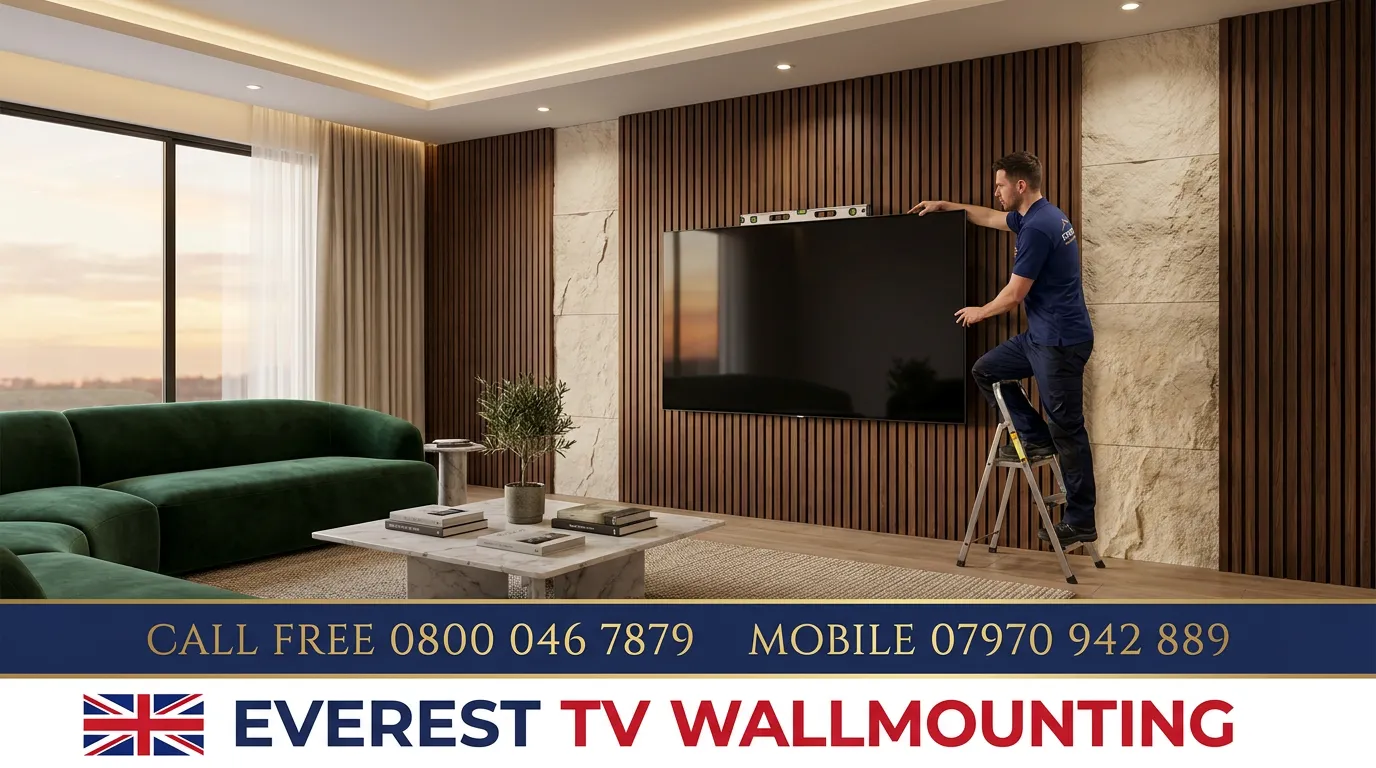
Wall mounting a modern OLED, QLED, or large-screen television requires absolute structural precision. A single mistake can result in costly structural damage or a catastrophic screen smash. Our mobile installation teams carry advanced stud-finders, heavy-duty commercial wall anchors, and precision digital laser levels to ensure a perfectly straight, flush finish. We handle the entire engineering process, calculating optimum viewing angles, reinforcing weaker stud partitions, and safely routing high-speed HDMI and power leads through cavity walls or low-profile containment structures for a pristine, cable-free aesthetic.
Premium Brackets & Visual Styling
- ✓ Ultra-Slim Flush-to-Wall Mounting (For a Clean Picture-Frame Look)
- ✓ Tilting Wall Mount Installations (To Safely Eliminate Overhead Glare)
- ✓ Full-Motion Articulating Corner Mounts (For Multi-Angle Viewing)
- ✓ Heavy-Duty Large Screen Installations (Up to 85"+ Screens Managed Safely)
Cable Routing & Integration
- ✓ In-Wall Hidden Cable Routing (Chasing Coax, HDMI & Power Leads)
- ✓ Media Wall AV Matrix Cable Interlinking & Audio Cable Dropping
- ✓ Premium Low-Profile Exterior Decorative Trunking Layouts
- ✓ Soundbar, Sky Box, and Games Console Bracket Integration
TV Wall Mounting Pricing
Price varies by TV size, wall type (plasterboard vs brick/concrete), bracket type, and whether cable concealment is included.
Your exact price is confirmed in a free written quotation before any work begins — no hidden fees, no call-out charge.
* All prices shown are exclusive of VAT. VAT at the standard rate will be added to your final invoice.
What We Supply and Fit
Why Use a Professional TV Mounting Service
Same-Day Service Available
Ready to book for tv wall mounting?
✓ Free written quote ✓ No call-out fee ✓ 5-year guarantee
How Our TV Wall Mounting Service Works
Wall & Room Assessment First
Our engineer locates studs, noggins, and safe fixing points using a detector, checks for buried cables and pipes behind the surface, and selects the correct fixing type for your wall material before any drilling begins.
Bracket Selection & Correct Viewing Height
We choose the right bracket — fixed, tilting, or full-motion — for your screen size and the way you use the room. We recommend the correct mounting height for comfortable viewing rather than guessing or going by eye.
Secure, Level TV Mounting
The bracket is secured with the correct fixings for your wall type, your TV is mounted and verified level with a spirit level, and all AV connections are made and tested before we move to cable management.
Cable Management & Full AV Setup
All cables are routed through the wall cavity where possible, or concealed in colour-matched trunking where not. Every HDMI connection is tested, your AV sources are set up, and the room is left tidy before we go.
Common Problems Our TV Wall Mounting Customers Come to Us With
These are the situations we deal with every day — and why a professional, properly-equipped engineer makes the difference.
Understanding Your Wall Type Before Anything Else
The single most important factor in a TV wall mounting is the wall type, and it needs to be correctly identified before any bracket is purchased. Solid brick and concrete walls are the most forgiving — almost any masonry fixing rated for the load will hold securely, and even large 85-inch screens mount reliably. The complication arises with plasterboard: standard plasterboard is 12.5mm thick and will not hold a TV by itself. The load must transfer to the timber or metal studs behind the board.
Studs in UK stud walls are typically spaced at 400mm or 600mm centres, which may or may not align with the bracket's fixing holes. When studs don't align — which is common — the solution is a spreader board: a piece of structural plywood fixed across multiple studs that distributes the load safely. We carry spreader materials on every van. The third common wall type is dot-and-dab: plasterboard bonded to solid masonry with adhesive pads. It looks solid but has a void behind the board, and standard fixings can pull through under dynamic load. The correct approach is long resin anchors that pass through the board and bond into the masonry behind it. Identifying which wall type you have before drilling is not optional.
Cable Management: From Acceptable to Invisible
A wall-mounted TV with cables hanging down the front is a very common result of DIY installations, and it undermines the entire aesthetic purpose of mounting the screen. Cable management should be planned before any bracket is fixed, because the approach varies significantly depending on wall type and construction. In stud walls, cables can typically be routed through the wall cavity between two back plates — one behind the TV and one at a lower level where the cables exit to equipment. This in-wall method gives a completely clean finish: the TV appears to float with no visible connections.
In solid masonry walls, in-wall routing requires chasing — cutting a channel into the plaster — which is more disruptive but produces the same clean result. Where chasing isn't practical, quality colour-matched surface trunking is a professional alternative: flat conduit that runs down the wall and along skirting, painted to match the wall. We quote both options clearly and let you choose based on your priorities. What we don't do is leave a loose bundle of cables taped to the wall — every installation leaves the room looking finished.
Getting the Height Right: Eye Level Is Lower Than You Think
The most consistently wrong decision in DIY TV mounting is height. People instinctively mount screens where they can see them when standing, which places the centre of the screen at around 140–150cm — significantly higher than optimal for seated viewing. When you're sitting on a sofa, your natural sightline is roughly 95–105cm from the floor. The screen centre should be close to that height, which typically means the bottom of a 55-inch TV sits at around 75cm — lower than most people expect.
Mounting too high causes neck extension over a two-hour film, which produces discomfort and fatigue. It also changes the perceived geometry of the room — a high screen dominates visually in a way that makes a room feel smaller. The exception is bedrooms, where the viewing position is semi-reclined: here, a centre height of 110–125cm suits most bed heights. We discuss viewing position and furniture layout at every installation before a single pilot hole is drilled, because repositioning a mounted TV later is a full day's work.
Watch This Service in Action
Watch on YouTubeExpert Advice & Reading
View all expert articlesGet Your Free, No-Obligation Quote
Every property is unique. Contact us today for a personalized quote for tv wall mounting based on your specific requirements. Free quotes, transparent pricing, no hidden fees.
✓ No Hidden Fees ✓ Transparent Pricing ✓ Written Quotes ✓ All Work Guaranteed
Frequently Asked Questions
Everest Aerials operates a highly trained network of mobile AV installation engineers traveling across multiple UK counties. Because seamless wall mounting requires specialized tools, digital masonry testers, and a wide array of heavy-duty structural fixings, our mobile deployment units arrive fully stocked with premium brackets and cables to fit any screen size on the spot. By dispatching local mobile units across your area, we provide swift same-day transformations and firm on-site quotes without ever requiring a high-street showroom.
TV Wall Mounting Areas We Cover
Our tv wall mounting service is available across England, Scotland, and Wales — with local engineers in over 700 towns and cities ensuring fast response times wherever you are.
Greater London
South East
South West
Show all 126+ areas
Midlands
East of England
North West
Yorkshire & Humber